

What is ADA compliance?
ADA compliance refers to the adherence of websites and digital content to the Americans with Disabilities Act, ensuring equal access and usability for individuals with disabilities.
What is ADA compliance? ADA compliance makes your website accessible to all users and refers to the Americans with Disabilities Act (ADA) Standards for Accessible Design. Non-compliance with the ADA can result in fines ranging from $55,000-$150,000, along with lawsuits from affected users.
Make your business website more accessible throuogh ADA Compliance is a necessity if you want to avoid possible (and real) problems with the handicapped community.
2024 is here, and web accessibility is not just an option, it should be a business priority that not only gives your website a real competitive advantage but ensures a wonderful experience for the disabled who are visiting your site.
Fact: Studies show that up to 71% of people with disabilities will leave an inaccessible website within 10 seconds of accessing it. Your business website can’t afford to lose traffic and potential clients! As ewell, Google actually grades your website ranking using ADA Compliance as one of the ranking criteria in their algorythm. You can greatly influence the potential of your website when you become ADA Compliant.
Make your site accessible to more users today by giving them nearly full control over their experience on your site!
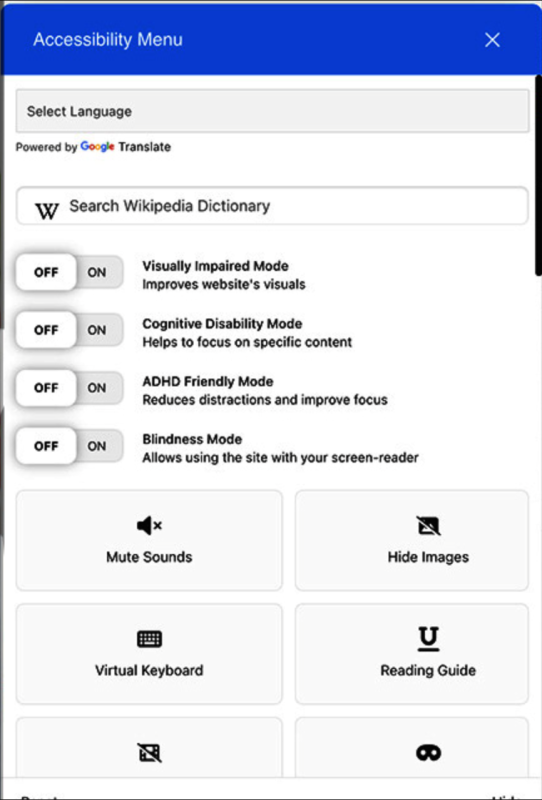
Why do ADA requirements matter?
ADA compliance refers to the Americans with Disabilities Act Standards for Accessible Design, which states that all electronic and information technology (like websites) must be accessible to people with disabilities.
Who needs to follow ADA requirements?
Now that you know ADA compliance’s meaning, you’re probably wondering whether it applies to you.
Organizations that need to adhere to ADA requirements include:
- State and local government agencies
- Businesses open to the public
Common examples of affected businesses include:
- Retail stores
- Banks
- Hotels
- Hospitals
- Doctor offices
- Restaurants
- Movie theaters
Since ADA encompasses electronic and information technology, like the Internet and websites, ADA compliance impacts almost all businesses and webmasters. In most cases, sites (and their designs) aren’t intentionally ignoring ADA requirements.
Even if ADA compliance doesn’t apply to you, creating a site that everyone can use is still important.
What happens if your website isn’t ADA compliant?
If your website isn’t ADA accessible, you are liable for the following:
- First-time violation: $55,000 – $75,000 fine
- Repeat violations: $150,000 fine
Federally funded organizations can also lose their funding, whether it’s a first-time or repeat violation.
Besides fines, a lawsuit could also be filed against your company if people with disabilities cannot access or use your site. Even if your business didn’t intend to discriminate or exclude people with disabilities from visiting or using your website, you could pay thousands of dollars in lawsuits.
Companies that have already been named in lawsuits include:
- Amazon
- Hershey’s
- The Wall Street Journal
- Rite Aid
- H&R Block
- Teachers Test Prep
Just because your business isn’t a well-known brand doesn’t mean you won’t be named in a lawsuit. Protect your brand now by investing the time and resources into becoming ADA compliant and delivering a site everyone can access.
What are the ADA compliant website requirements?
The U.S. Department of Justice hasn’t released official ADA compliance guidelines, like “maintain XYZ contrast ratio.” Its requirement is for online programs, services, and goods to be accessible to people with disabilities.
To reach that requirement, it recommends using the following standards and guidelines as a reference:
- Web Content Accessibility Guidelines (WCAG)
- Section 508 Standards